

 SR
SR 
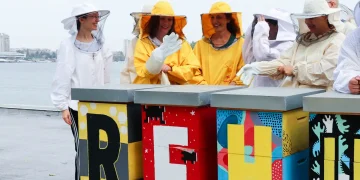
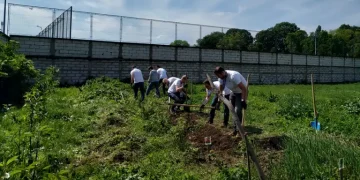
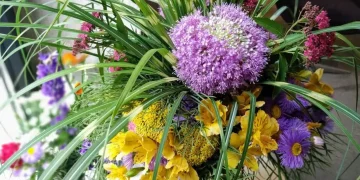
Ekonaut continues to encourage the planting of plants that are food for local pollinators in cooperation with selected organizations and socially responsible companies. This time, together with the company Pernod Ricard, on June 16, we sent a message about the importance of preserving the environment as part of the "Day of Responsibility" initiative by beautifying part of the lawn and space in the yard of their representative office in Bulevar Oslobođenja with plants that attract pollinators and setting up a hotel for solitary bees specially designed and made for this occasion.
On that occasion, Sabina Kerić and Miljan Peljević presented to the employees the projects of the association and the eco-social enterprise Ekonaut, as well as the second edition of the publication "100 plants for bees and pollinators" so that employees as individuals could, through planting and caring for honey plants, offer bees and pollinators in the city the necessary food through pollen and flower nectar. The present journalists and media representatives were given Ekonaut's publication"Introduction to urban garden communities" was presented.i.e. formation of a system of garden communities in Belgrade.

Now traditionally on the sixteenth of June since 2011, Pernod Ricard employees from all over the world dedicate the day to learning and making a positive impact in their communities. The Day of Responsibility is dedicated to a 2030 sustainability roadmap called "Good Times from a Good Place" to create a responsible impact on the community. This year the focus is on helping to protect and restore nature and biodiversity. "We want to send a message about the importance of preserving the environment in order to leave a better world for generations to come," said Vladimir Pavlović, Business Development Director of Pernod Ricard Serbia.
"In Serbia, there is a large number of species of solitary bees that do not live in organized societies like honeybees, but in cavities in the ground and trees, or make their nests out of clay or leaves. They are significant, because they start pollination at lower temperatures, so they are irreplaceable for a good yield in orchards, especially those species that bloom early after the end of the last frost. By growing plants that attract them, keeping beehives in a responsible way, providing space for pollinator habitats, setting up hotels and watering holes for insects, each of us can contribute and help feed them and survive winter, so that they can resume their most important work on the planet in the spring - pollination," said Sabina Kerić, president of the Ekonaut association.

The campaign that Econaut started in 2018 through the BeeConnected project, in addition to educating the public about responsible urban beekeeping, the biology of bees and pollinators, encouraged companies and individuals to focus on improving their immediate environment by adapting open spaces to local biodiversity by planting plants that are important for pollinating insects by initiating the creation of "honey gardens" of different sizes and structures but according to similar principles. Since it is important for these types of insects to provide habitats that are disappearing and endangering their survival, in cooperation with industrial designer Ivan Erkić, and guided by the advice of biologist Jovana Bila Dubaić, we piloted the creation of a hotel for insects, which is a combination of metal and wood, and which was set up as part of a "honey garden " in order to provide a nesting place for solitary bees.