

 SR
SR 
Why Are Solitary Bees Important?
Solitary bees are among the most efficient pollinators in nature. Unlike honeybees, they do not live in hives, do not produce honey, and their sting is harmless as it does not cause allergic reactions. However, these bees are super-pollinators, especially for fruit trees, as they can pollinate many more flowers and at lower temperatures compared to honeybees! Without them, many plants would struggle to reproduce, fruit crops would yield lower-quality produce, and harvests would be significantly reduced.
Unfortunately, these bees are increasingly endangered, primarily due to habitat loss (lack of nesting sites and food sources) and pesticide use. They are also threatened by introduced species, pollution, and the effects of climate change. Their disappearance would trigger the loss of other species that directly or indirectly depend on them. This is why it is essential for ordinary citizens to get involved in their conservation—everyone can help!

What Is the "Bee is a Key" Project?
For years, Ekonaut has been promoting the conservation of pollinator biodiversity, raising public awareness of this crucial issue in various ways. This year, in collaboration with the Institute for Animal Husbandry (project lead), Friends of Mason Bees and Faculty of Science in Novi Sad and with the support of the Center for the Promotion of Science, we are launching a citizen science project and campaign under the name “Bee is a Key – Mapping and biomonitoring the population of wild pollinators across Serbia through a safe and non-invasive method”.
This two-year project involves monitoring solitary bee populations by citizens across Serbia. So far, over 744 species of solitary bees have been recorded in Serbia, but little is known about them. Through this research, we aim to determine their distribution and abundance in as many locations as possible across the country. And that’s where we need you! Participation requires minimal effort, costs nothing, and benefits both the bees and all of us.
Your task is simple: you will receive a "bee hotel" from us along with instructions on how to place it in your yard, garden, or orchard. If solitary bees are present in your area, they will settle in naturally. We will guide you through the entire process.
For more details about the BEE IS A KEY project and ways to get involved through citizen science methods, visit the Friends of Mason Bees website! !
What Do You Get?
- A bee hotel (a tube filled with reeds).
- Education on how to care for and monitor solitary bees—you might even discover a new species!
- Most importantly, you will help bees find a home.


Why You?
If you are a nature enthusiast, gardener, orchard owner, nature reserve manager, biology teacher, or simply a curious citizen, this is your chance to take part in real scientific research and contribute to the study and preservation of pollinators!
How to Apply?
To get started, send us an email at dolasevicslobodan.izs@gmail.com Applications are open until February 20, 2025.
If you have any additional questions, feel free to contact us. If you are selected for the project, you will receive all materials from us free of charge. However, the number of bee hotels available is limited. Keep in mind that we aim to cover various habitat types and different regions of Serbia where data is still lacking. Additionally, the selection process will consider the motivation of participants to actively contribute to monitoring and the project overall.
Specially for orchard owners, we have prepared a survey that can help develop recommendations for the Ministry of Agriculture of the Republic of Serbia regarding measures to improve fruit production and provide guidelines for optimal use of pollinators.

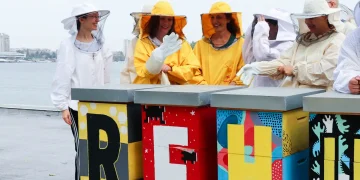
The project was first introduced at the first regional beekeeping festival in Belgrade, organized by the Belgrade Beekeepers Association (BUP) under the name BEE FEST 2025This event took place on February 1st at the Hyatt Hotel, gathering around a hundred beekeepers from the region, along with esteemed lecturers from the United States and Austria. The festival aimed to raise awareness about the importance of beekeeping and provide valuable knowledge and skills for this sector of agriculture. At the event, Dr. Slobodan Dolašević from the Institute for Animal Husbandry delivered a lecture on the importance of solitary bees and ways in which everyone—especially beekeepers—can help them. Participants were invited to join the "Bee is a Key" citizen science project and become part of the scientific community by monitoring their bee populations once they receive their mason bee colonies, which will be distributed through the project in late February and early March.
Projects that utilize citizen science for data collection aim to strengthen collaboration between researchers and the public in addressing societal challenges and achieving common goals. They also encourage active public participation in research processes. Citizen science projects promote innovative approaches to scientific research and emphasize the social impact of citizen-led scientific studies, particularly in the context of achieving sustainable development goals. This project is funded through a public call for financing citizen science research projects, issued by the Center for the Promotion of Science, under the auspices of the Ministry of Science, Technological Development, and Innovation.